



25 Mar How Much Does a House Extension Cost in Sussex in 2026? A Guide for Budget Planning
House extension costs in the UK can vary, making it hard to know where to start or what a realistic budget looks like. In recent years, build costs across the country have shifted due to material prices, labour demand and inflation, and along the South East coast, projects often sit slightly above the national average because of access constraints, property age, local planning considerations and other factors.
In this guide, we’ll explore 2026 house extension costs in Brighton & Hove and the surrounding area, including average costs per m², what build cost typically covers and the additional (and sometimes unexpected) elements that influence the total price. Our aim is to provide clarity as you take the exciting first steps of investing in your home’s expansion.
Disclaimer: The costs in this article are intended to be a guide only, based on current UK costs and specific local insights for Brighton & Hove and the wider Sussex area. Actual costs will vary and can be higher or lower depending on factors such as design complexity, specification and finish level, site conditions and contractor quotes.
To discuss your project and receive an estimation or bespoke quote, please contact our team.
Why you can trust our expertise
We’re an award-winning construction and renovation company. With over 25 years of experience in Brighton & Hove and across Sussex, we understand the realities of extending period, listed and conservation area properties. As members of the Federation of Master Builders, with hundreds of successful projects delivered, our advice is grounded in hands-on local expertise that you can trust.
House extension costs in Sussex: at a glance
If you’re researching the average house extension cost in Sussex, it helps to start with a clear overview. The figures below reflect average 2026 build costs per m², based on current South East pricing.
These are guide ranges for construction work only and give a helpful starting point when budgeting. They are not intended to be an exact representation of what you might pay.
| Extension type | Average cost per m² (excl. VAT)* |
| Single storey | £2,200– £3,300 |
| Two storey | £2,300 – £3,350 |
| Wraparound | £2,300 – £3,500 |
| Side return | £2,200 – £3,500 |
*Figures are indicative only. Costs will vary depending on design, specification, structural complexity and site conditions. Prices exclude VAT and do not include planning or Building Control fees, professional services, utility connections or landscaping.
How specification affects extension costs
When budgeting for your home extension, you’ll want to keep in mind that cost per m² is influenced as much by specification as by size:
- Basic build: This typically covers the structural shell with standard fixtures and finishes, meaning costs usually sit towards the lower end of the spectrum.
- Standard finish: This reflects what most homeowners expect, with good quality windows and doors, typical flooring allowances and well-considered detailing.
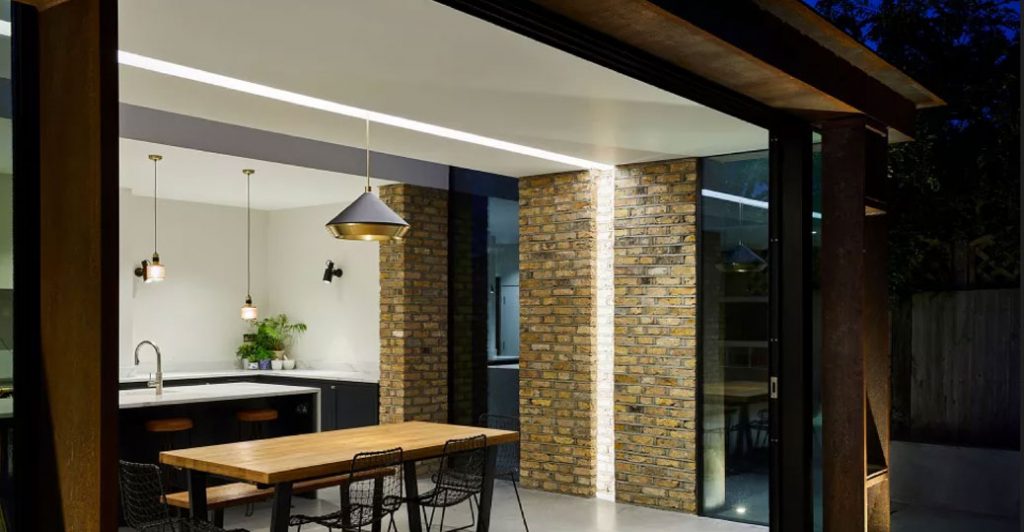
- High-end or premium specs: This could include bespoke glazing, large structural openings, rooflights, premium materials or detailed architectural features. Premium finishes can add to costs by 10-30% or more, depending on complexity.
What’s included in your “build cost” figure?
As you compare house extension prices and quotes, it’s essential to be clear on exactly what’s included in the build cost.
Build cost usually refers to the core construction work required to physically create the extension from the ground up, and doesn’t always cover everything needed to begin the project or complete the finished space. Getting clarity on this early will help keep your budget on track and avoid unexpected expenditures.
Typically included in build cost
A shell-only house extension will include the external build only, typically foundations, brick or block walls and the roof. This usually keeps build costs lower, providing the base for future work and decoration only.
Although specifications vary between contractors, a standard build cost for a full home extension will usually include the following:
- Groundwork and foundations: This covers site preparation, excavation and pouring the foundations that support the new structure. In Brighton & Hove and along the Sussex coast, this is a cost driver to be aware of, as the local soil can require deeper foundations.
- Structural shell and roofing: This covers the external walls, structural supports (including steel beams and RSJs where required), floor structure for two-storey extensions and the roof structure and coverings.
- Windows and external doors: This covers standard specification glazing and external doors forming part of the new extension.
- First fix plumbing and electrics: This covers the initial installation of pipework and cabling before walls and floors are closed up, such as positioning for radiators, sockets, lighting circuits and water supplies.
- Plastering: This covers the preparation of internal walls and ceilings ready for decoration.
- Second fix carpentry and joinery: This covers internal doors, skirting boards, architraves and basic internal finishing elements once plastering is complete.
Often not included in build cost
This is where misunderstandings can arise, so clarifying what’s not included and planning ahead is a smart move. For most home extensions, build cost generally will not include:
- Kitchen supply and installation: If your extension is creating a new kitchen-diner, the kitchen itself is usually a separate cost. Cabinetry, worktops and appliances can significantly influence your overall budget.
- Upgraded flooring finishes: Basic subfloors are typically included, but finished flooring such as engineered timber, stone or tiles is often priced separately.
- Decorating: Painting and final decorative finishes may or may not be included, depending on the scope agreed.
- Landscaping and external works: Patios, garden reconfiguration and boundary changes are usually additional to the core build.
- Professional fees: Architectural design, structural engineering, planning permission, building regulations fees, and party wall surveyor costs will all sit outside the construction build cost.
Additional home extension costs to budget for

If you’re researching the cost of a house extension in Sussex, the build cost per m² is an important figure to be aware of. But as we’ve seen, other costs can come into play.
Read on for some guidance on incorporating these additional costs into your initial extension budget. As an example, we’ve looked at Brighton & Hove specifically, but these cost considerations will apply across the wider Sussex area.
Planning permission (if required)
Not every house extension in Brighton requires planning permission. Many rear and ground floor extensions fall under Permitted Development rights, provided they meet specific size and design criteria.
In cases where planning permission is required (such as if you live in a listed home or will exceed permitted development limits), Brighton homeowners may be looking at around £528 for an application.
There is an additional service charge of £70.83 +VAT for planning applications over £100, and all applications submitted through Brighton & Hove council (rather than the Planning Portal) incur a service charge of £100 +VAT.
Building regulations (Brighton & Hove fees)
Even if planning permission isn’t required, Building Regulations approval almost always is.
Building Regulations ensure your extension is structurally sound, energy efficient and safe. This includes compliance around areas such as foundations, structural steel, insulation, fire safety, drainage and electrical work.
The cost of Building Regulations varies depending on the size and complexity of your project, but Brighton & Hove fees are often in the region of £800-£1,100 for Plan Check and Inspections, or a Building Notice.
Professional fees
Before any construction begins, many house extensions require professional input to move from ideas to approved, buildable plans. For Brighton & Hove projects, this might include:
- Architectural design services, covering concept layouts, planning drawings and technical construction details.
- Structural engineering calculations, particularly in cases where structural alterations are involved (for example, changes to load-bearing walls or building additional storeys).
Professional fees will vary depending on the size, complexity and location of your project. A rule of thumb is to factor in around 10-15% of the build cost for these services.

Party wall agreements
In Brighton & Hove, this is particularly relevant. If, like many Victorian and period homes, your property is terraced or semi-detached, you may need a party wall agreement under the Party Wall Act. This applies if you are:
- Building on or near a shared boundary
- Excavating close to neighbouring foundations
- Working on a shared wall
The process can involve appointing surveyors and agreeing formal documentation with your neighbour. There are associated surveyor fees and additional time to factor into your programme: costs vary from surveyor to surveyor, but in Brighton & Hove in 2026, they typically sit at the £120-£150/hour mark, with the average UK project typically costing around £1000+ by completion.
Contingency
Finally, there is contingency. This allows you to respond to any unexpected costs during the project, such as drainage adjustments or additional foundation work.
We typically advise our clients to allow 10–15% contingency on top of their estimated extension cost. For older Brighton properties, where structural unknowns are more common, a slightly higher allowance of up to 20% can be sensible to cover any surprises.
Why might house extensions cost more in Sussex and the South East?
When comparing the average house extension cost in the UK with prices in Brighton & Hove and the surrounding areas, you’ll often notice a difference. This is usually down to local conditions, property types, and the level of finish homeowners expect.
These are the factors that we’d recommend being aware of when planning a home extension in the area. It’s important to note that these factors are manageable with the right planning and support from a team that cares.
South East build and trade costs sit above the UK average
As part of the South East, Brighton and wider Sussex typically see build costs slightly above the national average. Labour rates, material demand and regional market pressures all influence this.
Skilled trades are in high demand in this area, and this is reflected in labour costs and scheduling.
Access constraints in terraces and narrow streets
Brighton and other towns and cities along the South East coast are known for their characterful streets, period terraces and tightly arranged plots. While beautiful, they aren’t always the easiest to build around.
Limited access can affect:
- Delivery logistics
- Scaffold positioning
- Waste removal
- On-site storage
Restricted parking and narrow roads may increase preliminaries (the indirect costs and logistical requirements to deliver a project) and labour time, particularly for rear or ground floor extensions where materials need to pass through the existing home.
These practical considerations don’t make Sussex projects unmanageable, but they do influence how they’re planned and priced.
Conservation areas and heritage considerations
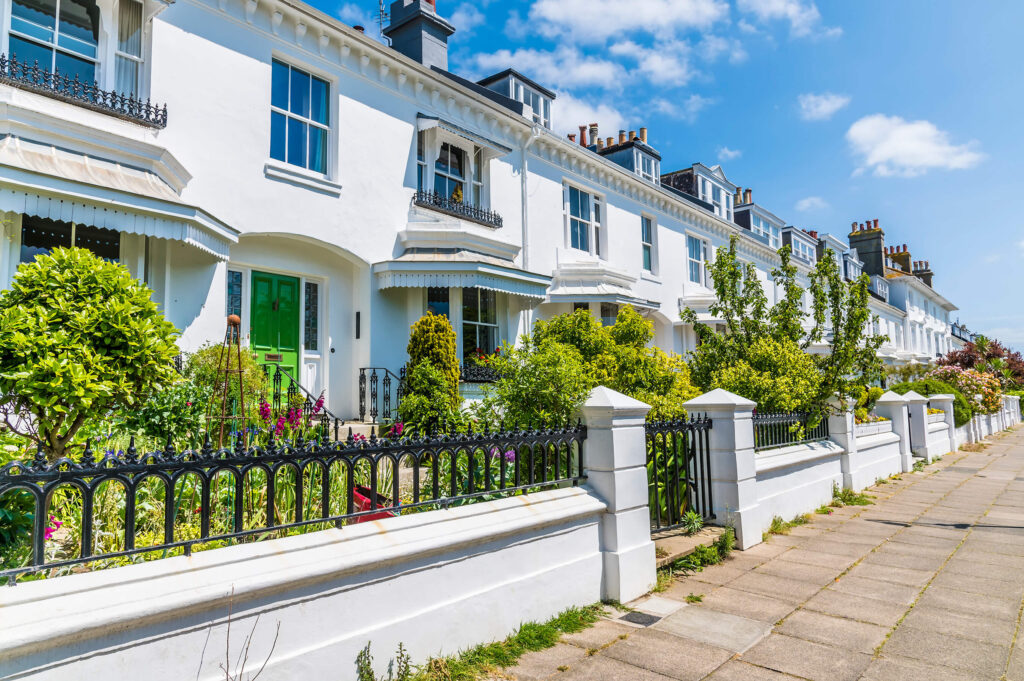
Large parts of Brighton & Hove, in particular, fall within conservation areas, and many Sussex homes are Victorian or Regency-era. Even if planning permission isn’t required, design choices may need to respect the character of your property and the surrounding area. This can affect:
- Window and door specifications
- External materials
- Roof design
- Glazing proportions
Approvals such as party wall agreements are also common in terraced properties, and conservation area considerations can extend timelines if additional documentation is required.
Older housing stock and structural unknowns
In addition to aesthetic heritage concerns, the county’s period homes can come with structural complexities.
In some cases, hidden structural issues or unstable ground conditions only become apparent once work begins. In our experience, extra foundation work or remedial measures can add anywhere from £5,000 to £30,000, depending on the extent required.
This isn’t the norm on every project, but it’s one reason contingency planning is so important when building a house extension in Sussex.
Design complexity and specification choices
Another major cost consideration is design choices. Large structural openings built to create open-plan kitchen-diners, bespoke glazing systems, rooflights or skylights all increase the engineering requirements of an extension.
Finishes also play a significant role. High-end kitchens, luxury flooring, premium doors and custom joinery can raise the total cost of an extension, even when the footprint remains the same.
Planning timelines and holding costs
Finally, planning processes or conservation approvals can occasionally delay project start dates. While waiting for approvals doesn’t increase build cost directly, it can create holding costs if materials or labour slots need to be rescheduled.
Clear early design work and understanding whether planning permission is required can help minimise these risks.
How to keep your home extension cost-effective
Keeping your house extension costs under control doesn’t have to mean a reduction in quality. It takes careful planning before work begins and clear decision-making at the right time. Our recommendations include:
- Finalising designs before starting work (including layouts, structural openings, window sizes and key finishes)
- Avoiding specification changes once work is underway
- Being mindful of how design features like large openings and bespoke glazing increase costs
- Considering phasing if needed, prioritising the core extension first
- Working with a team that understands the character of local properties
Speak to us about your extension project in Sussex
House extension prices in Brighton & Hove and across Sussex vary, but with guidance from local experts, they don’t have to feel uncertain. We’ll help you to understand the cost per m² you could be looking at and the additional costs and processes to consider in planning.
Every home is different, particularly in Sussex’s mix of period and coastal properties. A tailored approach will always give you a more accurate view than national or local averages alone.
If you’re exploring a house extension in Brighton, Hove or the surrounding area, we’re here to provide a realistic, bespoke cost estimate based on your home and plans. Contact our friendly team today to find out more.